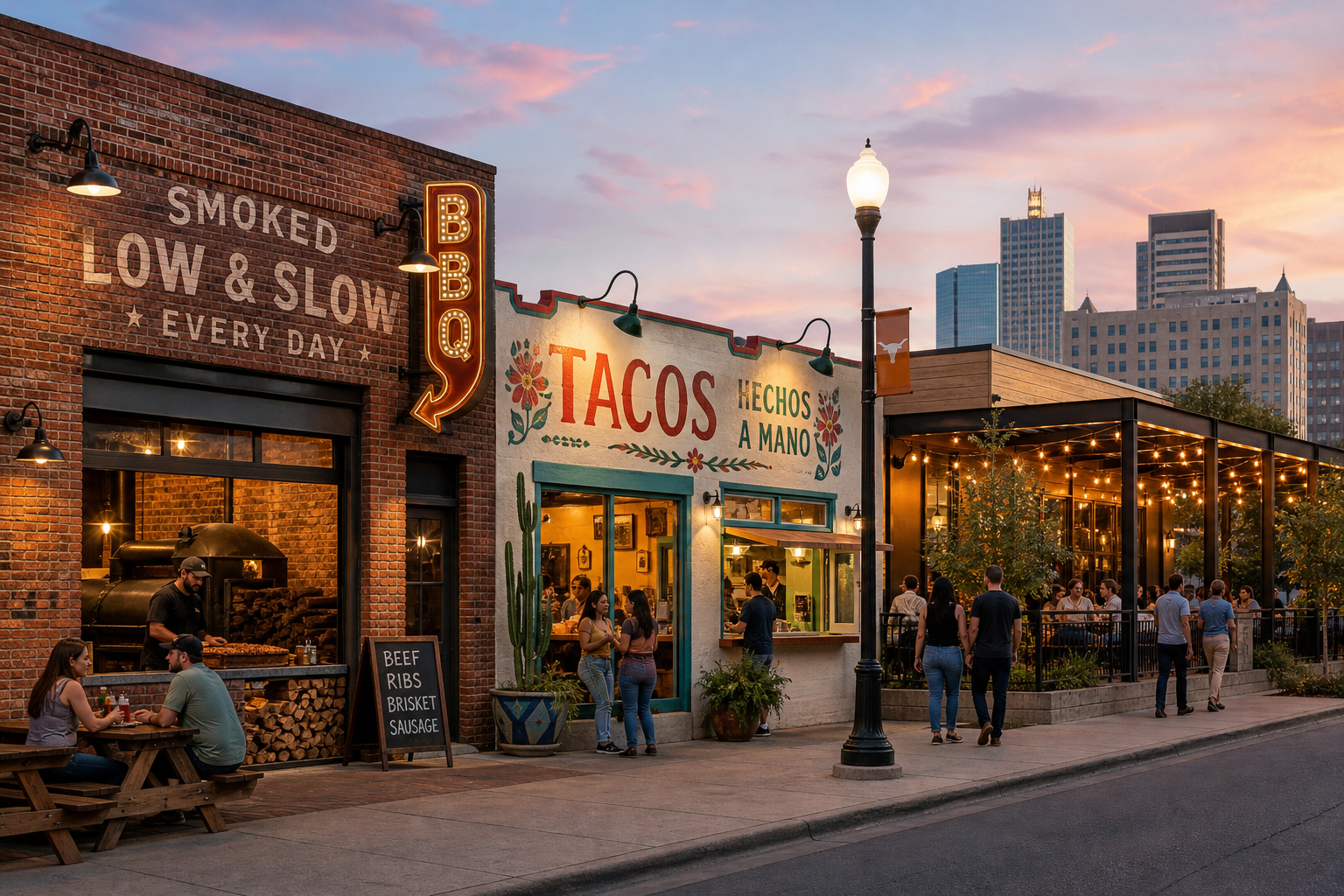
The best brisket in Fort Worth has never been on a billboard - it's in a strip mall someone's aunt told you about.
Find Fort Worth's best tables, the way locals do
Explore the full Fort Worth town guide on Local Eyes and find the spots worth your time, block by block.
Fort Worth eats differently than Dallas, and that matters
Fort Worth is not a smaller version of Dallas. The two cities sit 30 miles apart but occupy different culinary identities. Where Dallas trends toward sleek, concept-driven dining rooms, Fort Worth's food culture is rooted in cattle-trading history, neighborhood loyalty, and a preference for places that have earned their reputation over decades rather than press cycles. Tex-Mex and smoked meat are not novelties here - they are the baseline, and the city's best practitioners of both have been doing it long enough that locals treat them as reference points rather than discoveries. That context shapes how you should read any restaurant recommendation: a spot that looks unremarkable from the outside may be the one a resident has been going to for fifteen years. First-time visitors who approach Fort Worth dining with Dallas expectations tend to miss the point.
The neighborhoods that define Fort Worth's dining scene
The Stockyards is the city's most historically legible food neighborhood: old-school steakhouses with hearty plates in unfussy rooms, Tex-Mex counters, and family-friendly patios that reflect the area's cattle-market roots. Riscky's Barbeque, established in 1927, anchors the barbecue tradition here, while Cattlemen's Steak House, founded in 1947, remains a Stockyards institution. The Near Southside and Magnolia Avenue corridor is where the city's independent restaurant culture has concentrated most visibly: a 20-block stretch where ambitious chefs open their own places, patio dining is the norm, and the menu range spans every populated continent. West 7th runs a different energy - a fast-growing corridor with award-winning restaurants, natural wine bars, and breweries. And downtown Fort Worth holds more than 75 restaurants across a range of cuisines and price points, making it a reliable fallback when nothing else is decided. For context on how other cities organize their dining by neighborhood, the West Loop restaurant guide offers a useful parallel.
What locals actually use to choose a restaurant
Residents apply a short, practical filter when picking where to eat. Independent ownership matters: the Near Southside in particular has become the neighborhood where chef-owned spots concentrate, and locals read that as a signal of intent and quality. Walk-in versus reservation logistics is the next consideration - at least one prominent West 7th restaurant operates on open seating only, which means showing up early or being prepared to wait. Patio availability is taken seriously in Fort Worth, especially in the Magnolia area where outdoor seating is a standard expectation rather than a bonus. Price-to-portion value varies considerably by neighborhood: the Stockyards and strip-mall spots often deliver more food per dollar than the chef-driven rooms on Magnolia, which trade on craft and atmosphere. Knowing which mode you're in before you arrive saves a lot of disappointment. The same logic applies when exploring other local scenes - the Santa Barbara restaurant guide shows how neighborhood character shapes the dining decision in a very different city.
The cuisines worth seeking out beyond barbecue
Barbecue and steakhouses get the most attention from visitors, and they deserve it - but Fort Worth's Japanese restaurant scene is broader and more interesting than most people realize, running from sushi bars and omakase counters to izakayas, ramen houses, handroll bars, and teppanyaki destinations. Magnolia Avenue alone represents cuisines from every populated continent, which means a food crawl there can move from a local taqueria to a Vietnamese counter to a craft cocktail bar within a few blocks. The city's dining and bar scene doesn't slow down seasonally the way some markets do, so the options available in January are essentially the same as in July. If you're building a longer list of places to explore across Texas, the Sioux Falls restaurant guide and similar local guides on this platform follow the same neighborhood-first approach.
Four ways readers actually use this guide
A first-time visitor with one weekend
A visitor arriving Friday evening and leaving Sunday afternoon has time for roughly six meals. The most efficient approach is to anchor one meal in the Stockyards (for the barbecue and steakhouse context that defines the city's food identity), one on Magnolia Avenue (for independent, chef-driven variety), and one in West 7th (for the bar and brewery atmosphere). Skipping downtown for a dedicated meal makes sense unless the hotel is there - the neighborhood is convenient but the independent character is stronger elsewhere. Checking local events before the trip can surface pop-ups or markets that add a seventh, unplanned stop.
A new resident building a regular rotation
Someone who just moved to Fort Worth and wants to stop eating at chains needs a different strategy than a weekend visitor. The Near Southside is the logical starting point: the density of independent spots on and around Magnolia Avenue means a new resident can work through a different restaurant each week for months without repeating. The practical move is to identify one reliable brunch spot, one weeknight taqueria, and one occasion restaurant early, then expand from there. Tracking what's new through a platform like Local Eyes keeps the rotation from going stale.
Planning a date night with atmosphere in mind
Fort Worth's date-night options split between two distinct moods. West 7th offers the highest concentration of award-winning restaurants with designed interiors and natural wine lists, which suits a more polished evening. The Near Southside runs warmer and more relaxed, with patio dining that works especially well on mild evenings. The practical detail that matters most for date nights: check whether the restaurant takes reservations. At least one well-regarded West 7th spot is open seating only, which means a long wait on a Friday is a real possibility without a plan. Booking ahead at Magnolia Avenue spots that do take reservations removes that variable.
A family looking for kid-friendly options
The Stockyards is the most straightforward neighborhood for families: the steakhouses and barbecue spots there are built around hearty portions, casual rooms, and outdoor patios that absorb noise and movement without friction. Family-friendly eateries and outdoor patios are a consistent feature of the Stockyards dining landscape, which makes it the lowest-stress choice for a meal with children. Tex-Mex spots throughout the city also tend to be welcoming to families by default, with menus that cover enough ground to satisfy different ages. The Near Southside works for families too, particularly at lunch when the patio spots are less crowded than weekend evenings.
Fort Worth restaurant guide: questions locals actually ask
Browse Fort Worth restaurants the way locals find them
Fort Worth's dining scene rewards the reader who goes in with a neighborhood map rather than a Yelp search. Local Eyes covers the city block by block, with restaurant listings, local events, and guides written by people who actually live there. Browse the Fort Worth guide to start building your own list.