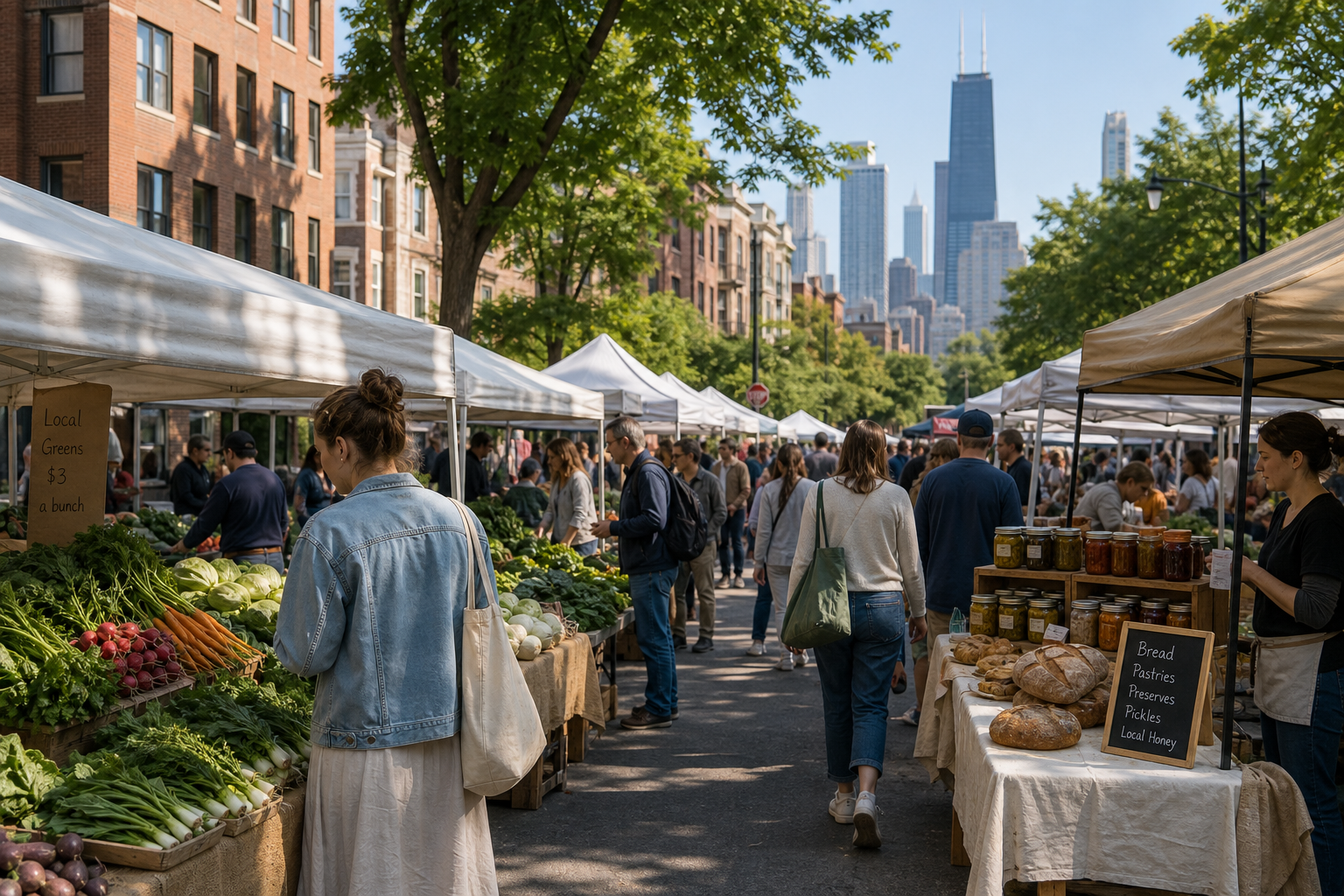
A market that runs five months a year still needs a presence for the other seven, and that is exactly where most vendors go invisible.
Find every farmers market day in Milwaukee
Explore the Local Eyes Milwaukee guide to find market days, vendor listings, and neighborhood picks written by people who actually live here.
More than 40 markets, one city to navigate
Most cities have a farmers market. Milwaukee has a farmers market culture. More than 40 markets operate across the metro area, from large anchor markets that draw tens of thousands of shoppers each season to smaller neighborhood gatherings that reflect the character of a single block. Understanding which markets run on which days, and what each one specializes in, is the practical knowledge that turns a good intention into an actual Saturday morning routine. The Local Eyes Market Day guide collects this information in one place, written by people who live in these neighborhoods and know which vendor lines move fast and which markets are worth the extra drive.
The markets with the longest roots
Two Milwaukee-area markets anchor the region's history. The West Allis Farmers Market, established in 1919, is the oldest and largest in the area, a reference point for anyone trying to understand the scale of what Milwaukee's market scene has built over a century. The Fondy Farmers Market in Lindsay Heights is entering its 109th season in 2026, with more than 80 farmers, food producers, and makers selling from May through November. Together these two markets illustrate the range: West Allis draws on a broad regional vendor base, while Fondy is deeply rooted in its North Side neighborhood and serves more than 45,000 customers across a single growing season.
Seasonal windows and year-round discovery
Most Milwaukee markets operate primarily May through October, with the heaviest activity on Saturday mornings. That seasonal rhythm creates a real information problem: by the time someone moves to a new neighborhood or a visitor starts planning a trip, many markets have already opened for the season or are weeks away from closing. A persistent, year-round guide matters precisely because the markets themselves are not year-round. The Local Eyes Market Day listings stay live between seasons, so a reader in February can bookmark a market in Bay View or Wauwatosa and return when it opens, rather than relying on a social media post that has already scrolled away.
What vendors offer beyond produce
The common image of a farmers market is stacked vegetable crates, but Milwaukee's markets have grown well past that. Prepared foods, artisan goods, local dairy, baked items, and specialty products from local makers fill the vendor rosters at markets like Cathedral Square and the South Shore market in Bay View. Programs like Milwaukee Market Match, which matches EBT food benefits at participating markets, have also made nutrition access a meaningful part of how these markets operate, connecting SNAP participants to fresh food in neighborhoods that might otherwise have limited options. Understanding which markets participate in these programs is part of what a genuinely useful local guide covers.
How Local Eyes organizes this for Milwaukee readers
The Local Eyes Market Day guide is not a scrape of vendor websites. Each listing is part of a place guide written from an on-the-ground perspective, organized by neighborhood and day so a reader can answer the practical question: what market can I reach this weekend? Vendors with a Local Eyes listing gain a persistent presence connected to reviews and, for those who want it, a cinematic promo video through Local Eyes Studio. For locals discovering their city and visitors planning around market days, the guide works as a reliable starting point rather than a search result that may or may not reflect what is actually open this week.
About the area
Milwaukee has one of the densest farmers market ecosystems in the Midwest, with more than 40 markets spanning from the lakefront neighborhoods to Ozaukee County. The Local Eyes Milwaukee guide organizes them by day, neighborhood, and season so you can plan around market days rather than stumble across them.
- Milwaukee has more than 40 farmers markets spanning from the lakefront to Ozaukee County.
- The Fondy Farmers Market is entering its 109th season in 2026, with more than 80 vendors.
- The West Allis Farmers Market, established in 1919, is the area's oldest and largest.
- Fondy serves more than 45,000 customers each growing season.
- Most Milwaukee markets run primarily May through October, with peak activity on Saturday mornings.
- Milwaukee Market Match matches EBT food benefits at participating farmers markets.
How the Milwaukee market guide works
- 1
Find your neighborhood or day
The Milwaukee Market Day guide is organized so you can search by neighborhood, day of the week, or market name. Whether you are in Bay View looking for a Sunday option or visiting downtown and want to know if Cathedral Square's market is running, the guide gives you a direct answer rather than a list of links to check individually.
- 2
Read the on-the-ground listing
Each market listing is written by people who live in that part of Milwaukee. That means the information includes practical context: what the market is known for, which vendors tend to draw a crowd, and what the atmosphere is like, not just an address and a time.
- 3
Check vendor and program details
Listings note relevant details like Market Match EBT participation, seasonal open dates, and what categories of vendors are typically present. This is the information that determines whether a market actually fits your needs, not just whether it exists.
- 4
Plan your visit or bookmark for later
Because the guide stays live year-round, you can bookmark a market that is currently between seasons and return when it opens. Visitors planning a trip to Milwaukee can build a market day into their itinerary weeks in advance, with confidence the listing will still be accurate when they arrive.
Benefits
Coverage across 40-plus markets
Milwaukee's farmers market scene spans more than 40 locations across the metro area. The Local Eyes guide collects them in one place, organized by neighborhood and day, so you are not piecing together information from a dozen separate websites.
Written by people who live here
Every listing is part of a place guide written from an on-the-ground perspective. That means practical, local context about what each market is actually like, not a data feed.
Live year-round between seasons
Most Milwaukee markets run May through October. The guide stays live all year, so you can research and bookmark markets in the off-season and return when they open.
Program details that matter
The guide notes participation in programs like Milwaukee Market Match, which matches EBT food benefits at participating markets, so readers can confirm eligibility before making the trip.
Who uses the Milwaukee farmers market guide
Visitor building a Milwaukee weekend itinerary
A traveler planning a long weekend in Milwaukee wants to experience the city's food culture beyond restaurants. Using the Local Eyes Market Day guide, they identify that the Fondy Farmers Market runs May through November with more than 80 vendors, and that Cathedral Square hosts a market in the East Town neighborhood. They can schedule a Saturday morning around one and a Sunday around the other, arriving with a sense of what each market offers rather than wandering in blind.
New Milwaukee resident learning the neighborhood circuit
Someone who has recently moved to Bay View or Wauwatosa wants to build a weekly farmers market habit but does not yet know which markets are closest, which days they run, or what they specialize in. The Local Eyes guide, written by locals, gives them a neighborhood-by-neighborhood orientation that a generic search result cannot, including context about the character of each market and what to expect on a first visit.
Farmers market vendor seeking a persistent listing
A local food producer selling at one of Milwaukee's 40-plus markets has a presence at the market itself but no consistent digital discovery between market days. A Local Eyes listing gives that vendor a year-round presence connected to the Milwaukee guide, with the option to add a cinematic promo video through Local Eyes Studio for their listing and social channels.
EBT shopper identifying Market Match locations
A Milwaukee resident who uses SNAP benefits wants to know which farmers markets participate in the Milwaukee Market Match program before making the trip. The Local Eyes guide surfaces this program detail at the listing level, so the reader can confirm participation without calling ahead or arriving uncertain.
Farmers market questions from Milwaukee readers
Put Milwaukee's market days on your radar
The Local Eyes Milwaukee guide covers market days, neighborhoods, and vendor listings written by people who live here. Whether you are planning a visit or building a weekly routine, the guide gives you a starting point grounded in local knowledge.